Long before children can read whole books, they need to crack the code that connects letters to sounds. That code is phonics, and parents are often surprised by how much of it can be taught at the kitchen table in short, playful sessions. Learning how to teach phonics at home does not require teaching qualifications or expensive materials. It requires a clear order for introducing sounds, a few simple games, and ten relaxed minutes a day.
Phonics works because English reading is built on a system: letters and letter groups represent sounds, and children who can hear, say and blend those sounds can work out unfamiliar words for themselves. This guide explains the sequence to follow, the activities that make practice enjoyable, and the mistakes to avoid so home practice supports — rather than clashes with — what your child learns at school.
What Phonics Is (and What It Is Not)
Phonics is the relationship between letters (graphemes) and the sounds they make (phonemes). A child who knows that s says /s/, a says /a/ and t says /t/ can blend those sounds to read the word sat, even if they have never seen it before. That blending skill is the engine of early reading.
Phonics is not memorising whole words by sight, and it is not drilling flashcards for hours. Short, frequent, playful practice beats long sessions every time. It also sits alongside the wider world of stories and talk: keep reading aloud together every day, because the reading habit you build in children gives phonics a purpose — real books to unlock.
Start With Sounds, Not Letter Names
Young children learn the sounds letters make before they need the alphabet names. Begin with a small group of high-value letters — commonly s, a, t, p, i, n — because those six sounds already combine into dozens of simple words: sat, pat, tap, pin, nap, sip. Early success matters; a child who can read real words in week one feels like a reader.
Say each sound crisply, without adding an “uh” at the end: /s/ not “suh”, /t/ not “tuh”. That small detail makes blending far easier later. Introduce one new sound every few days, always revisiting the earlier ones, and use lowercase letters first, since those are what children meet in books.
Blending: The Skill That Makes Reading Click
Once your child knows a handful of sounds, blending is the next step. Write or lay out the letters c-a-t, point to each one as you both say the sounds, then sweep your finger under the word as you run the sounds together: “cccaaat… cat!” Start with two-sound words if three is frustrating, and celebrate every success loudly.
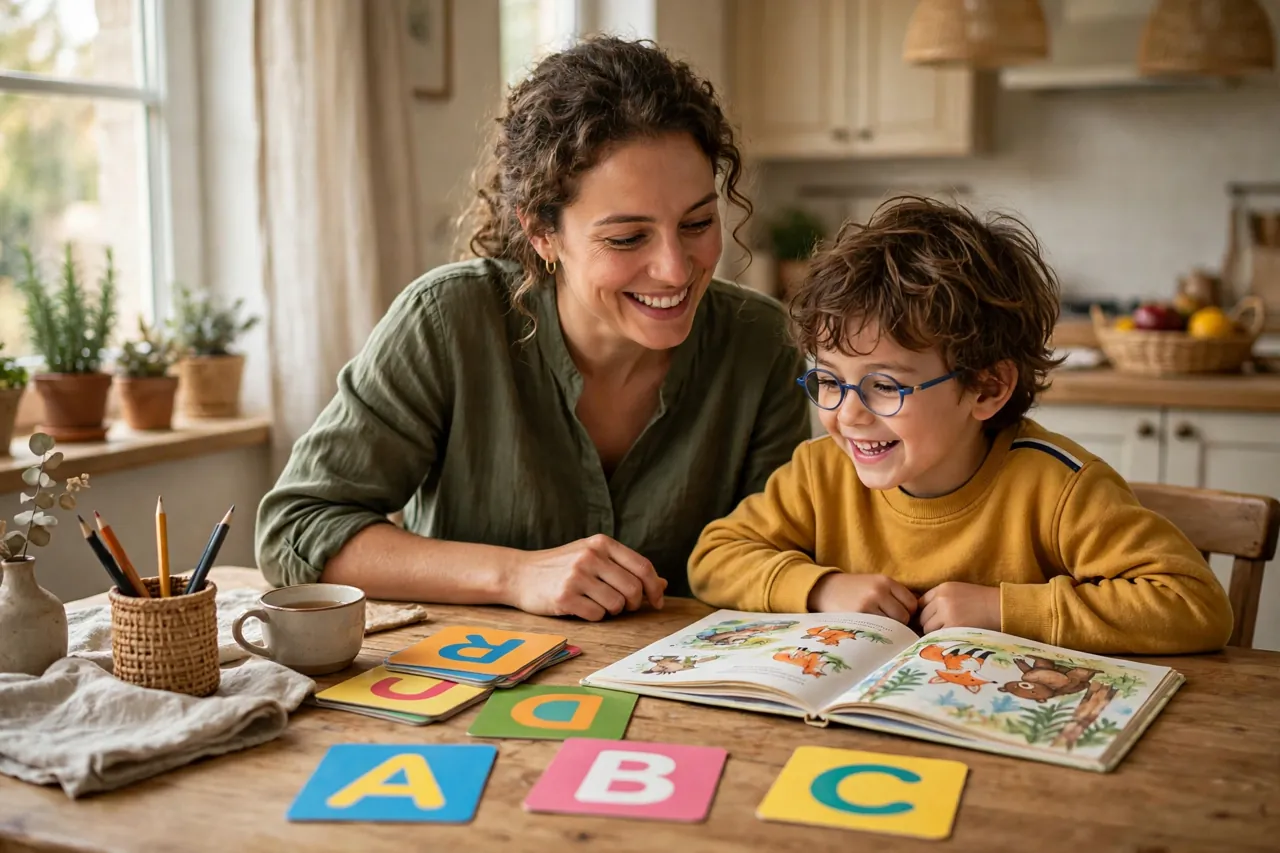
Games make blending practice painless. Spread letter cards on the floor and ask your child to jump on the sounds you call out, then blend the word they make. Digital practice can help too: well-chosen flashcard apps use spaced repetition to keep letter sounds fresh, as long as screen time stays short and supervised.
Move From Single Letters to Letter Teams
After single letters come digraphs — two letters making one sound, such as sh, ch, th, ng — and then common vowel teams like ai, ee, igh, oa. Introduce these the same way: one at a time, inside real words, with plenty of blending practice. Word families help here: once a child can read rain, show them train, Spain and snail so they see the pattern working.
This is also the stage where gamified learning earns its place. Points, levels and silly challenges keep motivation high precisely when the code gets harder, and the research on the benefits of game-based learning shows that playful practice improves persistence as well as recall.
A Simple Ten-Minute Daily Session
Consistency beats intensity. A workable session looks like this: two minutes revising known sounds with letter cards; three minutes learning or practising one new sound; three minutes blending real words that use it; and two minutes reading a decodable book or a page your child can genuinely manage. Stop while it is still fun — tomorrow’s session matters more than today’s extra five minutes.
Keep your materials in one small box so starting is effortless. Teachers build the same kind of ready-to-go collections for their classrooms; our guide to building a comprehensive collection of teaching resources has ideas you can borrow for your home phonics box, and thinking about a resource library that supports different learning speeds will help if you are teaching siblings at different stages.
Mistakes to Avoid
The commonest mistake is correcting every error instantly. If your child reads ship as “sip”, wait — self-correction is a skill, and many children fix the word once they reach the end of the sentence and realise it makes no sense. Jump in only when they are stuck, and help with the sound, not the whole word.
Avoid comparing your child with siblings, classmates or reading-age charts shared online. Children crack the code at very different speeds, and steady progress with confidence intact beats fast progress with tears. If, after months of regular practice, your child still cannot hear the separate sounds in simple words, raise it with their teacher — early support makes a real difference, and asking is a strength, not a worry.
Choose Books Your Child Can Actually Decode
The right practice book matters as much as the lesson itself. Decodable books are written to match the sounds a child has already learned, so every page is a genuine reading experience rather than a guessing exercise. Ask your child’s teacher which stage they are working at, and borrow or buy books from the same stage instead of jumping ahead to harder texts. If a book contains mostly sounds your child has not met yet, put it back on the shelf for later and read it aloud together instead — listening to stories builds vocabulary and comprehension while decoding catches up at its own pace.
Bringing It All Together
Teaching phonics at home comes down to a reliable sequence
: sounds before names, a few letters at a time, blending from the very first week, letter teams introduced gradually, and ten playful minutes a day. Add daily stories, patient correction and plenty of praise, and you give your child the master key to reading — one sound at a time.