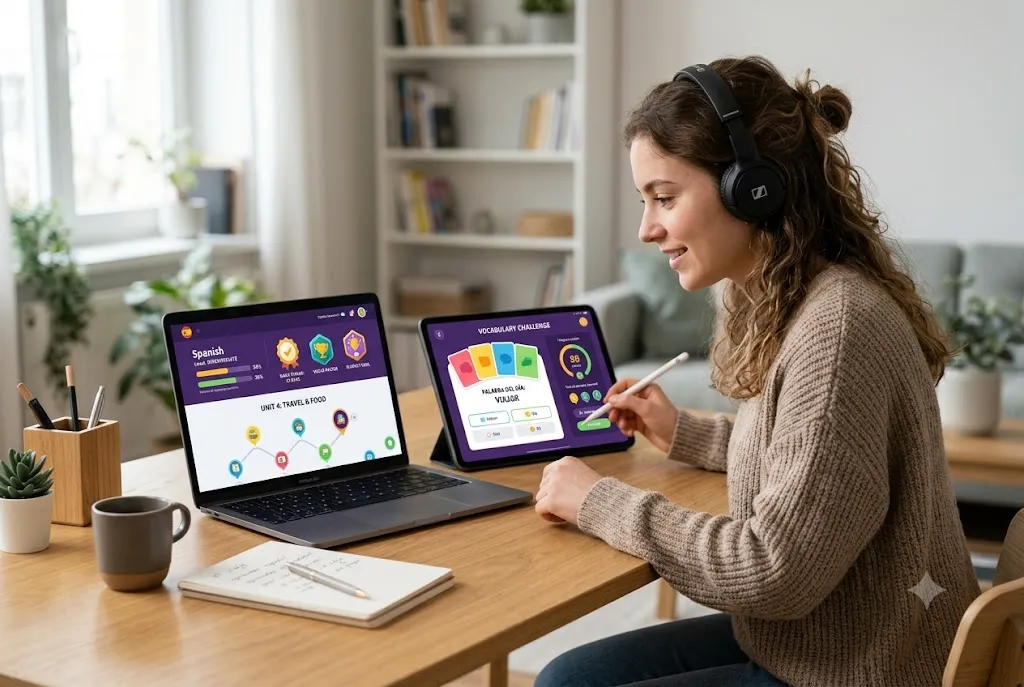
Gamified language learning has transformed the way people study new languages by making lessons more engaging, interactive, and rewarding. Instead of relying solely on textbooks and repetitive exercises, learners can earn points, complete challenges, unlock achievements, and practice real-world communication through game-like experiences. This approach not only increases motivation but also improves long-term vocabulary retention, listening comprehension, and speaking confidence.
Whether you’re a beginner learning your first foreign language or an advanced student refining your fluency, gamification can make language learning feel less like a chore and more like an enjoyable daily habit.
What Is Gamified Language Learning?
Gamified language learning is the use of game mechanics in educational environments to encourage consistent participation and improve learning outcomes. Instead of turning education into a video game, gamification applies elements such as rewards, progress tracking, leaderboards, levels, and achievements to keep learners motivated.
Many modern language learning platforms incorporate these techniques because they encourage regular practice while reducing the stress often associated with learning a new language.
Why Gamification Works for Language Learners
Learning a language requires consistency. One of the biggest challenges learners face is maintaining motivation over weeks and months. Gamification addresses this by providing immediate feedback and a sense of accomplishment after every lesson.
Benefits include:
- Higher daily engagement
- Improved motivation
- Better vocabulary retention
- Reduced learning anxiety
- Clear progress tracking
- More enjoyable study sessions
- Increased confidence through small achievements
By rewarding consistent effort, learners are more likely to build sustainable study habits.
Core Elements of the Gamification of Language Learning
The gamification of language learning relies on several proven motivational techniques that keep users engaged.
Points and Experience Systems
Completing lessons earns points or experience (XP), giving learners measurable progress after every activity.
Achievement Badges
Badges celebrate milestones such as completing lessons, maintaining study streaks, or mastering vocabulary categories.
Daily Streaks
Many language apps reward learners for practicing every day. Maintaining a streak encourages consistency, one of the most important factors in language acquisition.
Levels and Unlockable Content
As learners improve, new lessons, stories, quizzes, and challenges become available, providing a sense of progression.
Leaderboards
Friendly competition with classmates or global users motivates many learners to remain active without making the experience overly stressful.
How Language Learning Video Games Support Education
Beyond educational apps, language learning video games are becoming increasingly popular. Story-driven games, adventure titles, role-playing games (RPGs), and simulation games expose players to authentic dialogue, reading comprehension, and decision-making in the target language.
Video games naturally encourage repeated exposure to vocabulary and grammar through gameplay rather than memorization.
Some benefits include:
- Context-based vocabulary learning
- Improved reading speed
- Listening practice with voice acting
- Exposure to conversational expressions
- Cultural understanding through storytelling
Because players are emotionally invested in completing objectives, language acquisition often becomes more memorable.
Skills Improved Through Gamified Learning
Vocabulary
Games reinforce words through repetition, contextual clues, and practical application rather than isolated memorization.
Listening
Interactive dialogue and spoken instructions improve listening comprehension while exposing learners to natural pronunciation.
Reading
Menus, quests, subtitles, conversations, and in-game instructions provide continuous reading practice.
Speaking
Many modern platforms now integrate speech recognition, allowing learners to practice pronunciation and receive immediate feedback.
Grammar
Grammar concepts become easier to understand when introduced within meaningful situations instead of abstract exercises.
Examples of Gamification Features in Language Apps
Popular educational platforms incorporate gamification in different ways, but many include similar features:
- Interactive quizzes
- Timed vocabulary challenges
- Speaking exercises
- Daily learning goals
- Personalized recommendations
- Progress dashboards
- Achievement systems
- Weekly challenges
These features help learners remain engaged while providing measurable indicators of improvement.
Tips for Getting the Most from Gamified Language Learning
Set Realistic Daily Goals
Short, consistent study sessions are generally more effective than occasional marathon sessions.
Focus on Learning, Not Just Rewards
Points and badges are motivating, but meaningful progress comes from understanding and applying new vocabulary.
Review Previously Learned Material
Gamified apps often encourage moving quickly through lessons. Make time to revisit earlier content to strengthen long-term memory.
Practice Outside the App
Use new vocabulary in conversations, writing exercises, or language exchanges to reinforce learning.
Combining Gamification with Other Learning Methods
While gamification is highly effective, it works best as part of a balanced learning strategy.
For example, after building vocabulary through games, learners can improve listening skills by using a Netflix language learning extension that provides bilingual subtitles and interactive playback features.
Modern ed-tech for language learning also integrates artificial intelligence, adaptive learning, and pronunciation analysis to personalize lessons based on individual progress.
As learners expand into multiple languages, dedicated platforms for multi-language learning content delivery can help organize courses, assessments, and learning materials across different proficiency levels.
Common Misconceptions About Gamification
Games Are Only for Beginners
In reality, learners at every proficiency level benefit from engaging review activities, vocabulary reinforcement, and interactive speaking practice.
Gamification Replaces Formal Education
Gamified tools are excellent supplements, but comprehensive language learning also requires reading, listening, speaking, writing, and real-world communication.
More Points Mean More Learning
Progress indicators are motivating, but genuine fluency depends on understanding and using the language in practical situations.
The Future of Gamified Language Learning
Advancements in artificial intelligence, augmented reality, adaptive learning systems, and speech recognition are making gamified education even more personalized. Future platforms are expected to deliver immersive conversational practice, real-time pronunciation coaching, and collaborative multiplayer learning experiences.
As educational technology evolves, gamification will continue to play a significant role in helping learners stay motivated while developing practical communication skills.
Final Thoughts
Gamified language learning combines education with motivation, making consistent practice more enjoyable and sustainable. Through rewards, interactive challenges, progress tracking, and engaging activities, learners can develop vocabulary, listening, reading, and speaking skills without feeling overwhelmed.
When combined with authentic media, modern educational technology, and structured study plans, gamification becomes a powerful tool for achieving long-term language fluency.
For additional research on effective language education strategies, explore resources from the American Council on the Teaching of Foreign Languages (ACTFL), which provides guidance on best practices in language teaching and learning.