Key Takeaways
- Proper laboratory protocols are essential for conducting tooth science experiments safely.
- Personal protective equipment (PPE) reduces the risk of exposure to hazardous materials.
- Enamel and dentin are sensitive to extreme pH levels, requiring careful handling.
- Chemical reactions in tooth experiments can produce harmful fumes if precautions are ignored.
- Data integrity and accurate observation are critical to meaningful results.
The devil is in the details. Tooth science experiments, whether in academic laboratories or research facilities, involve intricate procedures that test the structural and chemical properties of human teeth. While these experiments can reveal fascinating insights into enamel hardness, dentin elasticity, and microbial interactions, neglecting safety protocols can lead to serious accidents or unreliable results.
At the heart of these experiments is the study of mineral composition and biological behavior. Tooth enamel consists predominantly of hydroxyapatite, a crystalline calcium phosphate, which interacts uniquely with acidic or basic solutions. Similarly, dentin contains collagen fibrils that respond differently under mechanical stress compared to enamel. Understanding these properties requires precise measurement tools such as microhardness testers, scanning electron microscopes, and spectrophotometers. Misuse of these instruments can compromise both safety and scientific accuracy.
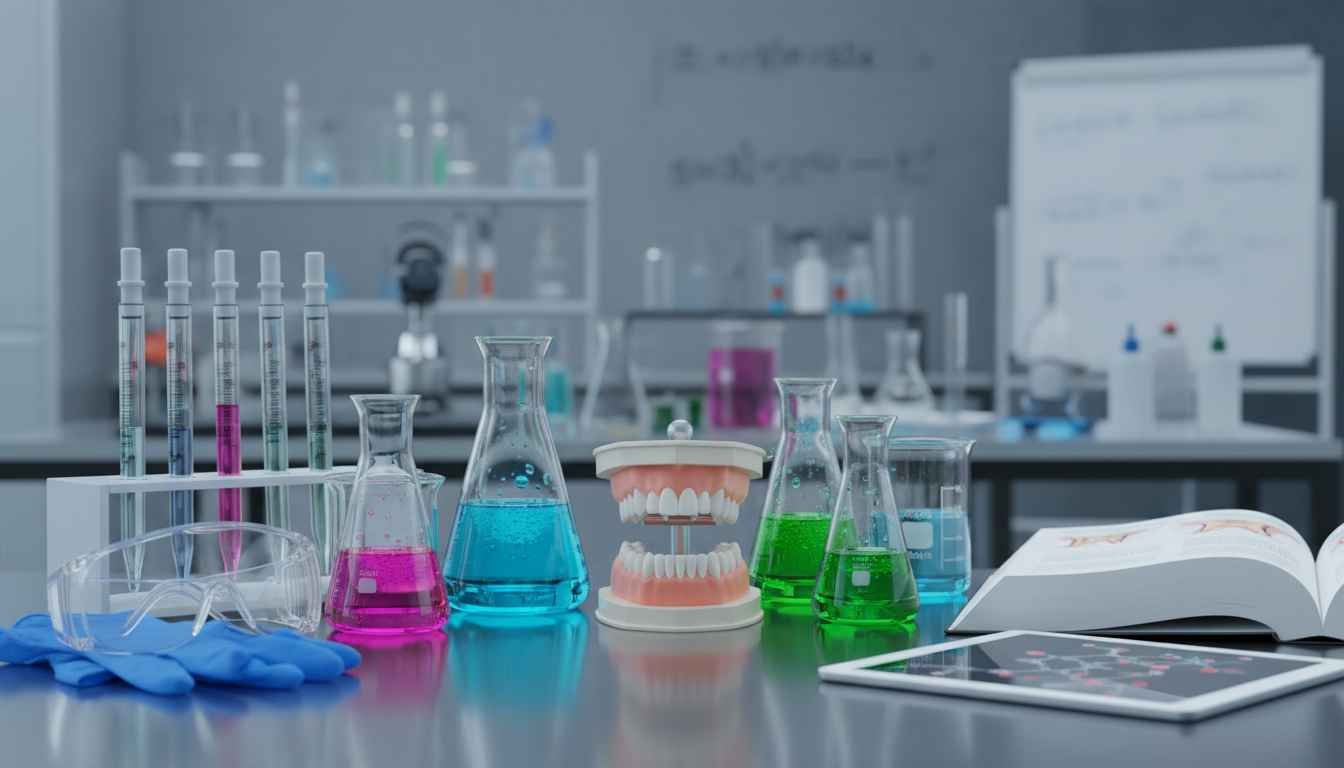
Another critical component of tooth science experimentation is chemical exposure. Fluoride treatments, demineralization agents, and bacterial cultures are common in laboratory settings. These substances, while essential for research, pose risks if handled improperly. Protective gloves, goggles, and lab coats are non-negotiable, and all procedures should occur under a fume hood when volatile chemicals are involved. Adhering to institutional safety guidelines not only prevents injury but also ensures the integrity of your data collection.
For those conducting comparative studies on tooth decay or remineralization, careful monitoring of pH and temperature is crucial. A small deviation in solution acidity can drastically alter the outcome, causing enamel erosion or microbial overgrowth that skews experimental results. Additionally, repeated exposure to strong acids or bases without neutralization steps can damage laboratory surfaces and equipment, creating long-term hazards. Researchers should implement routine calibration and inspection schedules to mitigate these risks and maintain reliable results.
At Bioscientifica, safety is emphasized alongside scientific discovery. Laboratories should provide clear documentation of all procedures, including stepwise chemical handling and waste disposal. This transparency not only protects personnel but also strengthens reproducibility in the wider research community. When experiments involve live bacterial cultures, sterilization protocols are mandatory to prevent contamination, as these organisms can persist on surfaces for extended periods and cause unintended infections.
Who Should Avoid This?
Individuals without formal training in laboratory safety, young students, or those with compromised immune systems should refrain from conducting independent tooth science experiments. Chemical exposure, sharp instruments, and microbial cultures present risks that are difficult to mitigate without supervision. Pregnant researchers should also avoid high-risk chemical handling, as some demineralization agents and bacterial cultures can be harmful to fetal development.
Additionally, researchers with limited access to appropriate PPE or fume hoods should reconsider conducting tooth experiments. Attempting these studies without proper safety infrastructure increases the likelihood of accidents, including chemical burns, respiratory issues, and contamination of experimental samples. Even seemingly minor oversights, such as improperly sealing a reaction vessel, can have cascading effects on both safety and data accuracy.
Best Practices for Safe Tooth Science Experiments
Implementing strict protocols is essential. Always conduct a risk assessment before beginning any experiment, identifying potential chemical, biological, and mechanical hazards. Use high-precision instruments and regularly verify their calibration. Maintain a clean workspace and dispose of all reagents according to institutional guidelines. Lab notebooks should be updated in real time, documenting observations, measurements, and any deviations from planned procedures.
Time management is also a critical factor. Prolonged exposure to strong acids or bases, even in small quantities, can compromise tooth samples and endanger researchers. Scheduling experiments in stages, with controlled breaks and decontamination periods, minimizes these risks. Furthermore, collaboration and peer review within the laboratory can provide additional safety oversight, reducing the likelihood of human error.
Finally, training and continuous education are indispensable. Researchers should attend workshops on chemical safety, microbial handling, and equipment operation. Staying informed about the latest regulations and best practices ensures experiments are conducted responsibly, and scientific results are credible and reproducible.
By integrating these safety measures and protocols, tooth science experiments can proceed with minimized risk while still delivering valuable insights into dental structure, decay, and treatment strategies. Awareness, preparation, and precision are the cornerstones of responsible research in this intricate field.