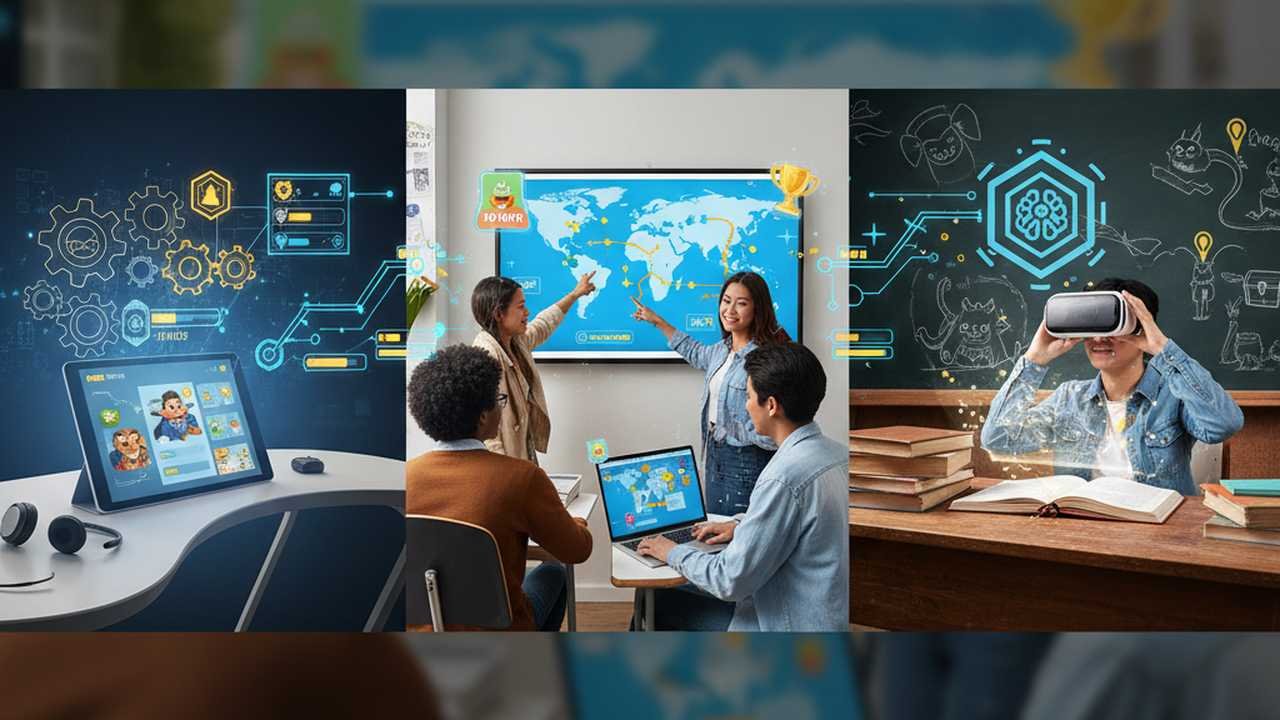
Introduction: A Game-Changer in Education
In the world of education, where traditional methods are constantly being challenged, gamified learning has emerged as a revolutionary approach. It’s more than just a trend; it’s the future of how students engage with their studies. Imagine transforming a mundane lecture into an exciting challenge, a dull textbook into an interactive adventure. That’s the power of gamified learning – an innovative technique that merges education with game elements to make learning more engaging, motivating, and, yes, effective. But what does it truly mean for online, hybrid, and traditional education programs? In a world saturated with digital tools and distractions, gamification is not just a bonus; it’s a necessity. It’s the key to capturing attention and maximizing retention, making it an indispensable part of any modern educational framework. And if you haven’t yet embraced it, you’re already falling behind.
The Science Behind Gamification: Why It Works
Gamified learning isn’t just a clever trick – it’s grounded in solid research. Studies have shown that gamification taps into key psychological triggers that motivate and engage learners. By incorporating elements such as points, badges, leaderboards, and challenges, gamification plays on our natural desire for achievement and progression. The act of earning rewards or leveling up boosts dopamine levels in the brain, creating a sense of satisfaction and reinforcing the behavior. It’s no wonder that students who participate in gamified learning environments report feeling more involved and driven. This is especially vital for cva patient education, where engaging patients actively in their learning can lead to better retention of critical information and a deeper understanding of their condition. It’s not just about memorizing facts – it’s about making the learning experience dynamic and rewarding.
Increased Engagement: Turning Learning Into an Experience
Traditional education, whether online, hybrid, or face-to-face, often struggles with keeping students fully engaged. Instructors might deliver the best material, but if it isn’t presented in a captivating way, students can easily zone out. This is where gamification steps in. When you add interactive elements, competitions, or storylines to the learning process, you turn passive learning into an active, immersive experience. Consider the success of educational games like Duolingo, which uses challenges and streaks to keep language learners hooked. By gamifying online courses or traditional classroom settings, educators can transform dry, monotonous lessons into something far more engaging. The rewards, challenges, and immediate feedback create a learning environment that students can’t help but immerse themselves in. This is especially crucial in fields such as cva patient education, where engagement is key to understanding complex concepts related to stroke recovery.
Motivation Boost: Transforming Struggles Into Triumphs
One of the primary benefits of gamified learning is its ability to boost motivation. Students are naturally more motivated when they can see clear goals, progress, and rewards. Instead of slogging through pages of textbooks or endless online modules, learners are encouraged to keep going because they want to earn the next badge, level, or high score. This gamified approach not only creates intrinsic motivation but also fosters healthy competition. In online and hybrid settings, where students may feel disconnected or isolated, the sense of achievement and progression can be a huge motivator to keep going. For individuals learning about cva patient education, the rewards and positive reinforcement help ensure that they don’t give up on understanding the crucial details needed for proper care and recovery.
Customization and Personalization: Tailoring the Learning Experience
One of the greatest advantages of gamified learning is the ability to customize and personalize the experience. With traditional learning models, students often have to follow a set curriculum, sometimes at a pace that doesn’t suit them. However, gamification allows for adaptability. Students can choose their challenges, work at their own pace, and even revisit material when needed. For example, a gamified system can provide tailored quizzes that address individual weaknesses or allow students to advance through levels as they master different concepts. This customization is especially beneficial in complex subjects like cva patient education, where individuals may need additional support to grasp different aspects of stroke recovery and rehabilitation. Gamification allows patients to learn and progress at their own speed, ensuring they never feel overwhelmed or left behind.
Collaboration and Social Interaction: Building a Community
One often-overlooked benefit of gamification is the promotion of collaboration and social interaction. In traditional and online education settings, students can sometimes feel like they’re on their own, especially if they’re learning remotely. Gamification fosters a sense of community, whether it’s through leaderboards, team challenges, or social platforms that encourage collaboration. By working together to achieve a goal, students can learn from one another, share insights, and build relationships that enhance the overall educational experience. This sense of camaraderie is crucial in both online and hybrid education programs, where isolation can lead to disengagement. For healthcare learners, such as those involved in cva patient education, having a support network to discuss their progress and share experiences can drastically improve the retention of critical health information.
Real-World Applications: Preparing Students for Success
When students engage in gamified learning, they’re not just playing – they’re learning real-world skills. The ability to make decisions, think critically, and solve problems under pressure are all part of the gamified learning experience. These are skills that directly translate into the professional world. For example, healthcare professionals who engage in gamified simulations of cva patient education scenarios can practice diagnostic and treatment strategies in a risk-free environment. They can test their knowledge, refine their skills, and learn from their mistakes without any real-world consequences. This hands-on, experiential learning builds confidence and prepares students to face real-life challenges in their careers.
Fostering a Growth Mindset: Overcoming Fear of Failure
Gamification has a powerful impact on the way students perceive failure. In traditional education settings, failure can often be seen as the end of the road, a sign that a student is not “good enough.” However, in a gamified environment, failure is seen as a stepping stone to success. Players can fail, learn from their mistakes, and try again until they succeed. This concept encourages a growth mindset, where students understand that effort and perseverance lead to improvement. For cva patient education, this approach is essential. Patients may struggle with complex medical terms or rehabilitation exercises, but by gamifying the experience, they can feel encouraged to keep trying, knowing that success is just around the corner.
Gamification in Hybrid and Traditional Settings: A Balanced Approach
While gamified learning has seen massive success in online programs, its application in hybrid and traditional settings is also incredibly powerful. Hybrid programs, which combine both in-person and online learning, are the perfect environment for gamification. Students can take advantage of online challenges and interactive modules at home, while also engaging in face-to-face discussions and group work in the classroom. This blending of the digital and physical worlds creates a learning environment that is dynamic, flexible, and highly effective. Even in traditional classrooms, gamification can be introduced through interactive quizzes, group challenges, or gamified assignments. The integration of these elements helps break up the monotony of traditional education and brings energy and excitement to the classroom. Whether online, hybrid, or in-person, gamified learning is here to stay, and those who don’t adopt it risk falling behind.