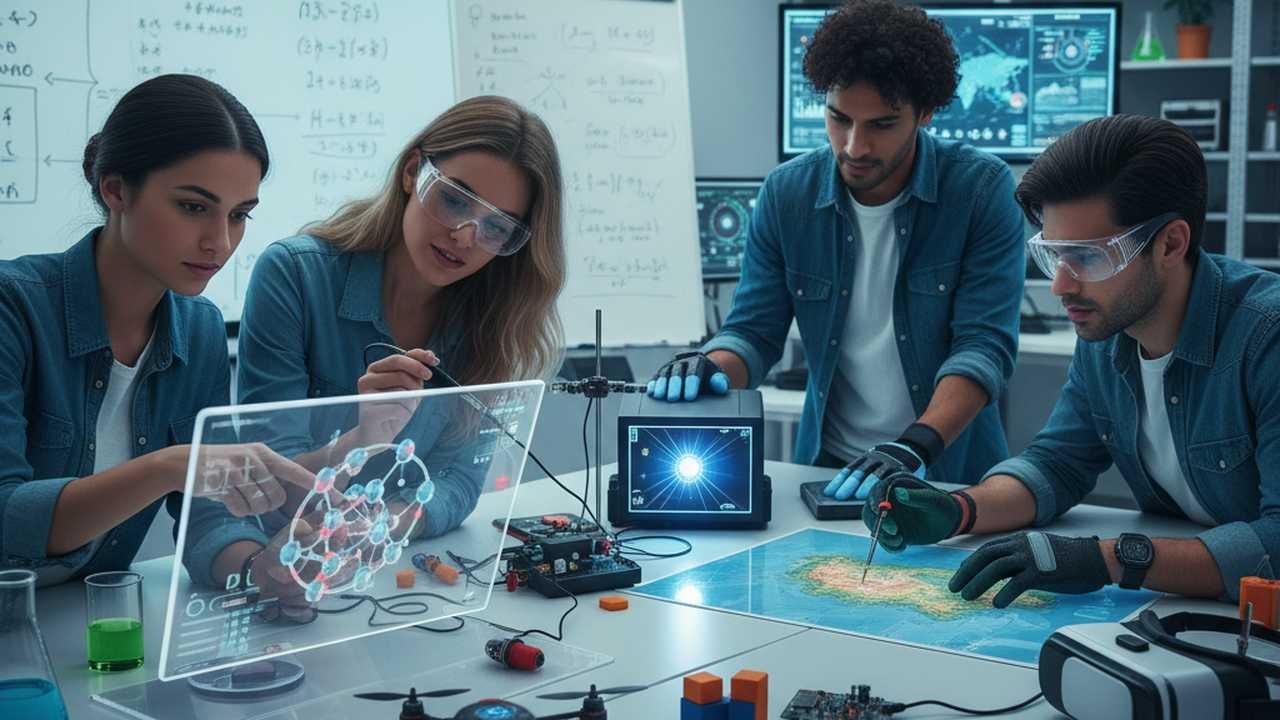
Imagine a classroom where students are not just passive recipients of information but active participants in their learning journey. A classroom where complex STEM concepts come alive through interactive methods and tools, making learning an engaging and immersive experience. This is not a distant dream but a present reality, thanks to the integration of Technology Enhanced Learning (TEL) in education. TEL is revolutionizing the way we teach and learn, especially in STEM disciplines, by providing dynamic and interactive learning environments that cater to diverse learning needs.
Understanding the Power of Technology Enhanced Learning (TEL)
Technology Enhanced Learning (TEL) refers to the use of digital technologies to support, enhance, and extend learning experiences. In the context of STEM education, TEL encompasses a wide range of tools and methods, including interactive simulations, virtual laboratories, and collaborative platforms, that facilitate deeper understanding and engagement with complex scientific concepts. The integration of TEL in education allows for personalized learning experiences, immediate feedback, and access to resources that were previously unimaginable. For instance, students can now conduct virtual experiments, explore 3D models of molecular structures, and collaborate with peers across the globe, all within the confines of their classroom. This shift from traditional teaching methods to interactive, technology-driven approaches is not just a trend but a necessity in preparing students for the challenges of the 21st century.
Interactive Simulations: Bridging the Gap Between Theory and Practice
One of the most effective ways to teach complex STEM topics is through interactive simulations. These digital tools allow students to visualize and manipulate abstract concepts, making them more tangible and understandable. For example, in a physics class, students can use simulations to explore the principles of motion, gravity, and energy conservation by adjusting variables and observing outcomes in real-time. This hands-on approach not only enhances comprehension but also fosters critical thinking and problem-solving skills. Moreover, interactive simulations provide a safe environment for students to experiment and learn from their mistakes without the fear of failure. This freedom to explore and learn at one’s own pace is particularly beneficial for students who may struggle with traditional teaching methods, including Long-Term English Learners (LTELs), who often face additional challenges in understanding complex academic language and concepts.
Virtual Laboratories: Making Experiments Accessible to All
Virtual laboratories are another powerful tool in the arsenal of interactive STEM education. They provide students with the opportunity to conduct experiments and explore scientific phenomena without the constraints of physical lab spaces. This is especially crucial in under-resourced schools where access to laboratory equipment may be limited. Virtual labs offer a wide range of experiments in fields such as chemistry, biology, and physics, allowing students to engage in hands-on learning experiences that would otherwise be inaccessible. For instance, platforms like Labster offer immersive virtual labs where students can perform complex experiments, such as DNA sequencing or chemical reactions, in a controlled and safe environment. These virtual experiences not only enhance understanding but also ignite curiosity and a passion for science, technology, engineering, and mathematics.
Augmented and Virtual Reality: Immersing Students in Learning
Augmented Reality (AR) and Virtual Reality (VR) are transforming STEM education by providing immersive learning experiences that engage students in ways traditional methods cannot. Through AR and VR, students can explore the human circulatory system by walking through a 3D model of the heart or travel through space to study planetary systems. These technologies create a sense of presence and interaction that enhances learning and retention. For example, in a biology class, students can use VR to virtually dissect a frog, observing its internal structures in 3D, which deepens their understanding of anatomy and physiology. The immersive nature of AR and VR also caters to various learning styles, making complex STEM topics more accessible and engaging for all students, including LTELs, by providing visual and interactive contexts that support language development and comprehension.
Collaborative Platforms: Fostering Teamwork and Communication
In the real world, STEM professionals often work in teams to solve complex problems. Reflecting this in the classroom is essential for preparing students for future careers. Collaborative platforms facilitate teamwork and communication among students, enabling them to work together on projects, share resources, and solve problems collectively. Tools like Google Classroom, Microsoft Teams, and Slack allow students to collaborate in real-time, share documents, and communicate effectively, regardless of their physical location. This collaborative approach not only enhances learning but also develops essential skills such as communication, collaboration, and critical thinking. For LTELs, working in collaborative settings provides opportunities to practice language skills in authentic contexts, promoting language acquisition and academic success.
Artificial Intelligence: Personalizing Learning Experiences
Artificial Intelligence (AI) is playing an increasingly significant role in personalizing STEM education. AI-powered tools can analyze student performance data and adapt learning materials to meet individual needs, providing personalized learning pathways. For instance, platforms like DreamBox and Knewton use AI algorithms to adjust the difficulty level of math problems based on a student’s performance, ensuring that each student is appropriately challenged. This personalized approach helps to keep students engaged and motivated, as they receive instruction tailored to their current level of understanding. AI also provides immediate feedback, allowing students to identify areas of improvement and take corrective action promptly. For LTELs, AI can offer language support and scaffolding, helping them to comprehend complex STEM content and succeed academically.
Gamification: Making Learning Fun and Engaging
Gamification involves incorporating game elements into the learning process to increase engagement and motivation. In STEM education, gamified platforms like Kahoot!, Quizizz, and Classcraft turn learning into an interactive and enjoyable experience. These platforms use elements such as points, badges, leaderboards, and challenges to encourage students to participate actively and strive for mastery. Gamification taps into students’ intrinsic motivation, making learning more appealing and less daunting. For LTELs, gamified learning provides a low-stress environment where they can practice language skills and STEM concepts simultaneously, boosting confidence and academic performance.
Real-World Applications: Connecting Classroom Learning to the Outside World
Connecting classroom learning to real-world applications is crucial for making STEM education relevant and meaningful. Through project-based learning, internships, and partnerships with industry professionals, students can apply their knowledge to solve real-world problems. For example, students might work on a project to design a sustainable energy solution for their school or community, integrating concepts from science, technology, engineering, and mathematics. These real-world applications not only enhance learning but also inspire students to pursue careers in STEM fields. For LTELs, engaging in real-world projects provides opportunities to use language in authentic contexts, facilitating language development and cultural understanding.
Assessment and Feedback: Monitoring Progress and Supporting Growth
Effective assessment and feedback are essential components of interactive STEM education. Digital tools allow for continuous assessment of student progress, providing teachers with real-time data to inform instruction. Platforms like Edmodo and Seesaw enable teachers to track student performance, provide timely feedback, and adjust teaching strategies accordingly. These tools also allow for formative assessments, such as quizzes and polls, that help gauge student understanding and guide future instruction. For LTELs, timely and constructive feedback is crucial for language development and academic success. Digital platforms can offer language support and scaffolding, helping LTELs to comprehend complex STEM content and improve their language skills.
The integration of Technology Enhanced Learning in STEM education is not just a trend but a necessity in preparing students for the future. By leveraging interactive methods and tools, educators can create engaging and immersive learning experiences that cater to diverse learning needs, including those of Long-Term English Learners. The benefits of TEL are clear: enhanced engagement, personalized learning, and improved academic outcomes. As technology continues to evolve, so too should our approaches to teaching and learning. Embracing TEL is not just about adopting new tools but about reimagining education to meet the needs of all learners in the 21st century.