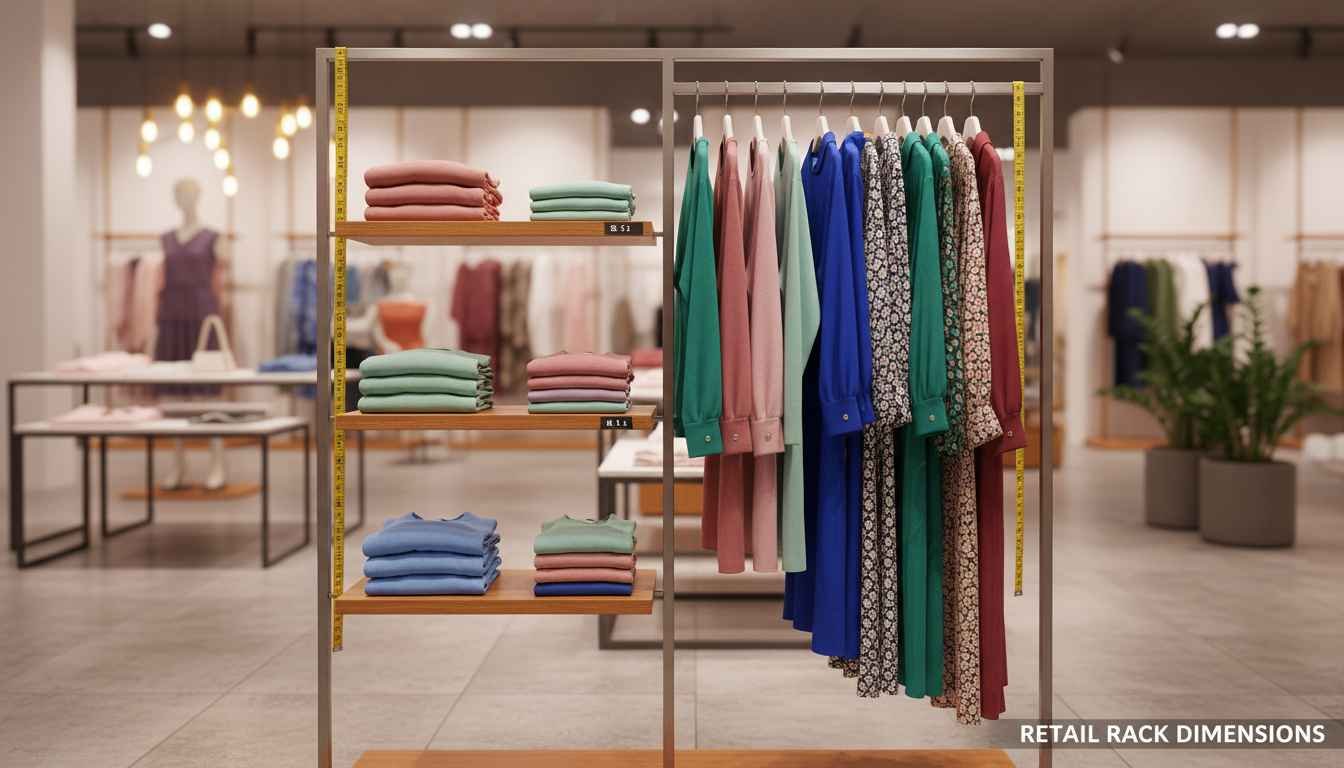
The devil is in the details. In retail, even the smallest decisions can influence sales, customer experience, and overall store aesthetics. Among these, the dimensions of clothing racks are often underestimated. Many store owners believe that larger racks automatically mean more storage and better display, but this assumption does not always hold true.
Understanding the standard dimensions of retail clothing racks is essential for optimizing floor space and improving merchandising. Typical single-bar garment racks range from 48 to 60 inches in length and 18 to 24 inches in width. The height is usually adjustable between 50 and 70 inches, accommodating a wide variety of clothing types from tops to long dresses. Double-bar racks, often used for maximizing vertical display, typically have a lower bar around 36 inches and an upper bar near 66 inches. These measurements, however, are not universal; local store size, traffic flow, and product type all influence the optimal dimensions.
One common misconception is that uniformity in rack sizes leads to a polished store appearance. While consistency can aid visual merchandising, varied dimensions often enhance shopper experience by creating dynamic browsing paths and allowing more flexibility in displaying seasonal items. Incorporating racks that vary in length and height can make high-demand items more accessible and less congested, which can translate directly into increased sales.
From a historical perspective, the evolution of clothing racks reflects broader trends in retail design. Early 20th-century department stores relied on fixed, bulky shelving units, which limited product visibility and required extensive floor space. By mid-century, mobile garment racks emerged, providing both flexibility and efficiency. Adjustable racks became standard in the 1970s, allowing retailers to experiment with vertical and horizontal display strategies. Today, lightweight aluminum and chrome-plated racks dominate the market, combining durability with adaptability to modern store layouts.
Myth-Busting Sidebar
Myth: Larger racks always increase sales. Reality: Oversized racks can create clutter and reduce shopper accessibility, ultimately harming sales performance.
For retailers considering expansion or redesign, knowing precise rack dimensions is more than a design choice; it is a strategic decision. For instance, a narrow aisle of 36 inches between racks may seem sufficient, but research in retail ergonomics shows that 42 inches provides better circulation, reducing customer frustration and increasing dwell time. Additionally, the width of a rack affects not only capacity but also product presentation. Wider racks may require fewer displays but can appear sparse if not fully stocked, while narrower racks allow for more compact and focused merchandising.
Investing in high-quality racks also ensures durability, reducing long-term operational costs. Adjustable racks allow quick reconfiguration during seasonal shifts, flash sales, or new product launches. This adaptability is particularly critical in high-traffic stores where inventory turnover is rapid. For a practical resource on reliable, cost-effective options, retailers can consult LD Products, which offers a variety of rack sizes suitable for diverse retail environments.
Who Should Avoid This
Despite the advantages, not all retailers benefit from elaborate or adjustable racks. Small boutiques with limited floor space may find large, multi-tiered racks cumbersome. Similarly, stores with low foot traffic may not see a meaningful return on investment from complex display systems. Over-investing in oversized or feature-heavy racks can restrict mobility, create safety hazards, and lead to underutilized inventory spaces.
In conclusion, retail clothing rack dimensions are a critical yet often overlooked aspect of store planning. By balancing height, width, and aisle space with customer experience and merchandising goals, retailers can optimize both aesthetics and sales performance. The choice of rack should be informed by historical trends, practical dimensions, and operational considerations rather than assumptions or myths about size alone.