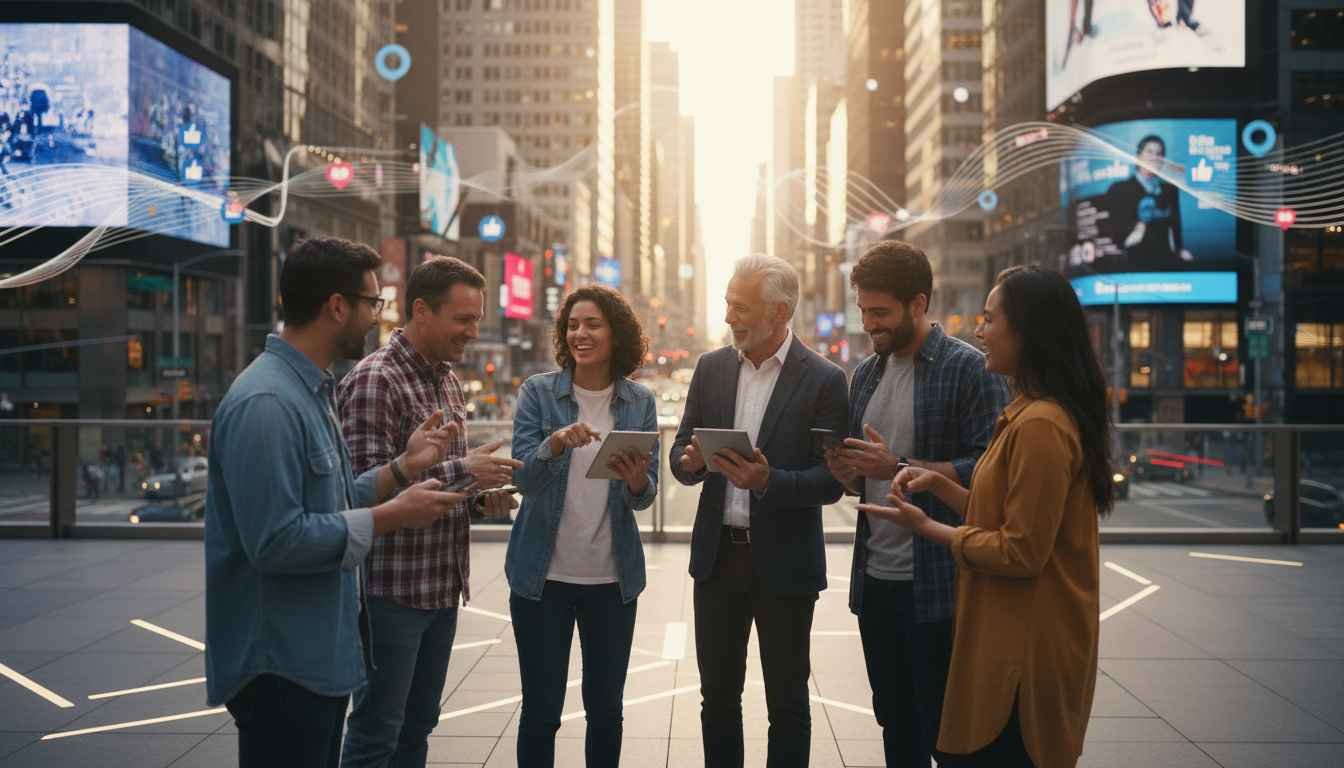
Remember the scene in “Black Mirror” where every emotion, every thought, every personal interaction could be quantified and shared instantly with the world? That unsettling glimpse into a hyper-connected society is no longer fiction – it is a mirror reflecting our evolving media culture. The platforms we scroll, click, and double-tap on are shaping not just the way we communicate but the very fabric of society itself.
Our contemporary media landscape is an ecosystem of constant stimuli, where culture is both created and consumed at speeds previously unimaginable. Algorithms dictate what we see, what we like, and even who we interact with, making the boundaries between personal experience and public spectacle increasingly porous. The sensory reality of being plugged into this networked society is almost visceral – our attention constantly pulled, our emotional responses measured and monetized, and our identities subtly molded by the content we engage with.
In this open letter, I want to explore how media culture is reshaping society, examine its benefits and drawbacks, and offer practical insights for navigating this new social terrain.
The Physical Experience of Media Saturation
Consider the sensation of scrolling through your feed late at night: the cold glow of the screen against your skin, the soft hum of notifications, the rapid heartbeat from unexpected news or viral content. There is a physical embodiment to media engagement that transcends mere observation. Studies indicate that prolonged exposure to high-stimulation content triggers dopamine surges similar to those caused by addictive substances, reinforcing the cycle of engagement.
Yet, this constant interaction with digital media is not purely neurological. There is a tactile and emotional component – a subtle restlessness when notifications pause, a fleeting satisfaction when an article resonates. Media culture has made experience itself a product, transforming everyday life into a series of measurable and consumable interactions. It’s no wonder that society increasingly defines itself not through shared physical spaces but through the shared consumption of curated digital experiences.
Algorithmic Culture and Social Cohesion
Algorithms now serve as both gatekeepers and creators of culture. They determine which news reaches your eyes, which memes circulate, and which social movements gain traction. While these systems can amplify marginalized voices and foster global conversations, they also risk homogenizing thought and reinforcing echo chambers. Media culture, in this sense, is a double-edged sword: it connects yet confines, diversifies yet segregates.
Within this ecosystem, the distinction between reality and curated representation blurs. Platforms like Instagram, TikTok, and emerging AI-driven networks encourage the construction of identities optimized for visibility rather than authenticity. Society’s perception of success, beauty, and morality is increasingly shaped by digital signals, likes, and shares. For researchers, this is a fascinating study of behavioral economics applied to human emotion. For users, it’s a subtle recalibration of self-worth.
The Role of Media Culture in Shaping Global Society
Beyond personal identity, media culture influences how societies process information, organize politically, and engage with global events. Real-time reporting and citizen journalism have democratized information but also introduced new vulnerabilities. Misinformation spreads faster than fact-checking can respond, and cultural narratives are often simplified to fit shareable formats. This paradox – of unprecedented connectivity coupled with information fragility – defines our era.
In exploring the rich tapestry of American history, few towns are as intriguing as Centralia, Pennsylvania, known for its unique cultural heritage and the environmental challenges it faces. The Centralia Cultural Society plays a pivotal role in preserving the town’s legacy, offering insights into its past while fostering community engagement. This article delves into the significance of this society and its efforts to maintain the historical narrative of Centralia. By examining the initiatives undertaken by the centralia cultural society, we can appreciate not only the struggles of its residents but also the cultural vibrancy that continues to endure amid adversity. Understanding this context is essential for anyone looking to grasp the full story of Centralia and its impact on local and national history.
Platforms act as modern public squares, yet the dynamics are heavily mediated. Where once culture evolved through local communities and shared physical experiences, today culture evolves through digital interactions governed by complex technological architectures. The implications for social cohesion are profound: empathy, understanding, and cross-cultural dialogue now require deliberate navigation rather than passive participation.
Practical Guidance for Navigating Media Culture
To engage responsibly, it’s essential to recognize the mechanics shaping our interactions. Awareness of algorithmic influence, intentional content consumption, and critical reflection on emotional responses can mitigate the negative effects of overexposure. Regular digital detoxes, diversified media sources, and active engagement in offline cultural experiences are not just advisable – they are essential for preserving cognitive and social well-being.
For more perspectives on media and society, Fair Observer provides insights into how global trends intersect with our daily digital lives, offering analysis beyond superficial viral phenomena.
Troubleshooting Media Engagement
| Problem | Solution |
|---|---|
| Feeling overwhelmed by constant notifications | Schedule focused offline periods and disable non-essential alerts |
| Echo chamber exposure limiting perspective | Follow diverse sources and actively seek out alternative viewpoints |
| Fatigue from curated identity pressure | Engage in authentic offline interactions and limit social media comparison |
| Difficulty distinguishing fact from misinformation | Verify information through reputable sources and cross-check facts |
Potential Drawbacks
Despite the benefits of media culture, there are inherent risks. Emotional burnout, reduced attention spans, and increased anxiety are well-documented effects of overexposure. Social media’s quantification of approval can erode self-esteem and exacerbate societal inequalities. Even with conscious engagement, the structural biases embedded in algorithmic curation remain largely invisible yet influential. Recognizing these limitations is crucial for anyone seeking a balanced digital life.
The Speculative Future of Media and Society
Looking forward, the integration of augmented reality, AI-driven content, and immersive media experiences will further transform culture. Imagine attending global concerts in a virtual arena, experiencing interactive news as if you were present at the scene, or maintaining social bonds across continents with haptic feedback devices mimicking touch. The potential is exhilarating, yet it raises ethical questions about privacy, consent, and authenticity. Will society adapt as gracefully as the technology progresses, or will we find ourselves outpaced by the very media we created?
The evolution of media culture is inevitable, but the direction is not predetermined. Collective awareness, critical literacy, and deliberate participation in shaping digital norms will determine whether this future strengthens social cohesion or amplifies division. As participants, creators, and consumers, we are architects of the society that emerges from the networked, media-saturated world.
Closing Reflection
Media culture is no longer peripheral – it is central to human society, shaping perceptions, behaviors, and global interactions. By understanding the sensory, emotional, and structural aspects of this environment, individuals and communities can navigate its complexities thoughtfully. Our challenge is not merely to consume but to curate our engagement intentionally, balancing the intoxicating immediacy of digital life with the enduring richness of human connection.
This is an open letter to the society we are collectively building: the digital mirror reflects both our best and worst selves. It is up to us to ensure the reflection is worth looking at.