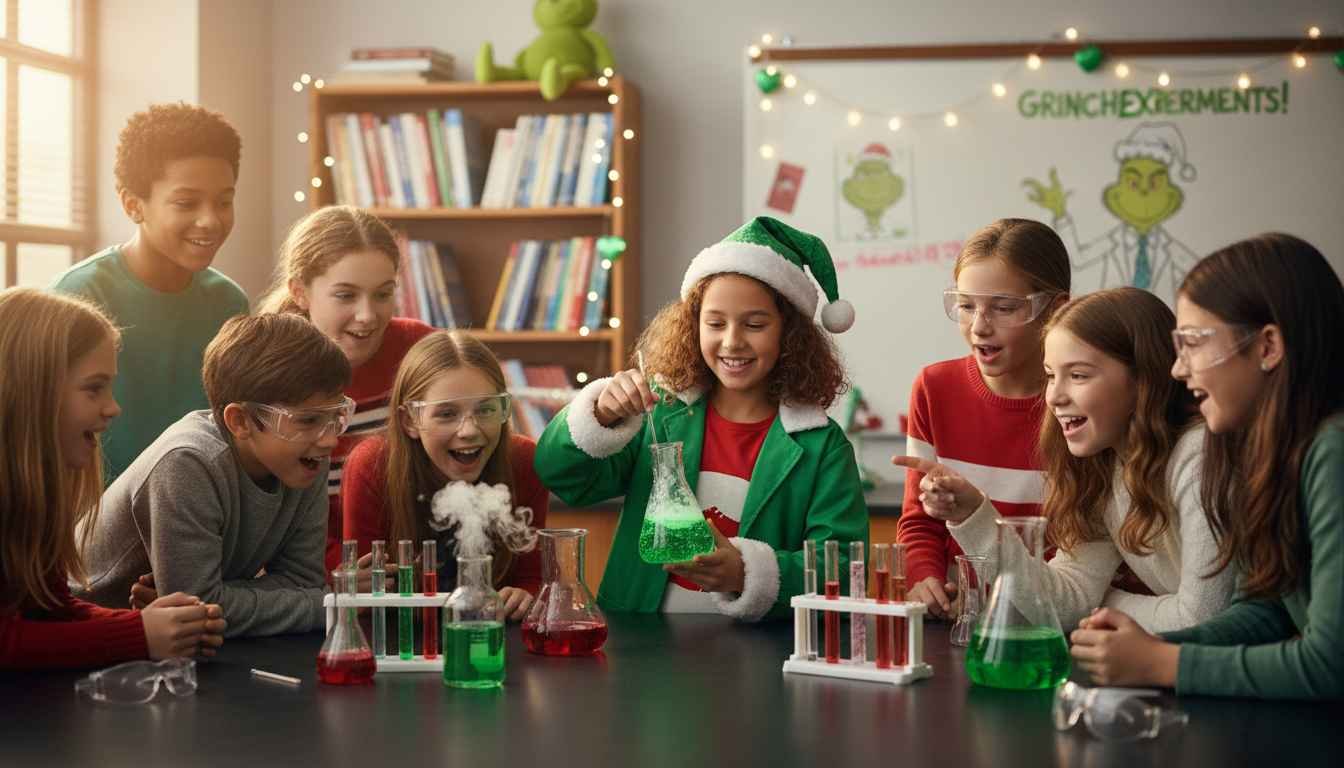
Let’s be honest for a second. Engaging students or participants in science requires more than dry theory and repetitive procedures. The Grinch science experiment provides an inventive approach to exploring chemical reactions, color changes, and thermodynamics in a controlled setting. Its appeal lies not only in its connection to a popular cultural figure but also in the tangible demonstration of scientific principles that can be observed in real time. Structuring this experiment into a clear routine ensures both safety and reproducibility, vital components for credible laboratory practice.
Preparation Phase
The initial stage of the Grinch science experiment focuses on assembling materials and preparing the workspace. This phase typically spans 15 to 30 minutes depending on group size and complexity. Required materials include standard laboratory glassware, pH indicators, food coloring, vinegar, baking soda, and optional thermochromic pigments for advanced color-change effects. It is essential to ensure that all participants wear protective gear including gloves, goggles, and lab coats. This step not only maintains safety standards but also reinforces the principle of responsible laboratory conduct.
Workspace preparation involves organizing materials into accessible zones, clearly labeling each chemical, and designating areas for observation and measurement. Proper setup minimizes cross-contamination and streamlines the experimental flow. The National Science Teachers Association (NSTA) emphasizes that preparation is critical to reproducibility and data integrity in classroom-based chemistry experiments, underlining its importance in structured routines.
Step-by-Step Experimental Routine
Step 1: Baseline Observation
Begin by recording baseline conditions. Fill a transparent container with water and add a neutral pH indicator. Participants should note the initial color and any observable characteristics of the liquid. Baseline observations establish a reference point for assessing subsequent chemical reactions and color changes, allowing for precise documentation of experimental outcomes.
Step 2: Controlled Reaction Initiation
Gradually introduce the acidic component, such as vinegar, to the container while stirring gently. Monitor the color transition carefully. The Grinch science experiment often employs contrasting colors to mimic the character’s green appearance, providing a visually engaging demonstration of acid-base reactions. Accurate measurement of volumes at this stage is critical; even minor deviations can alter the reaction’s intensity and duration.
Step 3: Triggering the Color Change
Add the baking soda in measured increments to neutralize the acid and observe the resulting effervescence. This reaction can also be enhanced with thermochromic or pH-sensitive dyes, which shift color in response to temperature or pH changes. Participants should record observations in real time, noting the rate of color change, bubble formation, and any temperature variations. Such detailed data collection ensures that the experiment is scientifically rigorous while remaining visually engaging.
In the realm of scientific exploration, the tools and methodologies we employ can significantly influence the outcome of our experiments. While flashy presentations and elaborate hypotheses often steal the spotlight, there lies an unsung hero that quietly underpins successful research: the data table. This essential component not only organizes information systematically but also aids in analyzing and interpreting results effectively. Understanding how to create and utilize a data table for a science project can elevate the quality of your work and ensure that your findings are both reliable and insightful. In this article, we will delve into the importance of data tables, their structure, and tips for maximizing their potential in your scientific endeavors.
Step 4: Data Recording and Analysis
Document all changes meticulously using charts, photos, or video recordings if permitted. Encourage participants to calculate reaction rates by timing the effervescence and noting color transition intervals. Analysis can include comparing theoretical expectations with observed outcomes, reinforcing the understanding of chemical kinetics and reaction mechanisms. At this stage, referencing reliable laboratory instrumentation, such as microplate readers, enhances the precision of measurement and provides quantifiable data for interpretation, as offered by providers like BMG LABTECH.
Observation and Interpretation
The Grinch science experiment offers several opportunities for interpreting results beyond visual appeal. Participants can examine the relationship between concentration and reaction intensity, the effect of temperature on reaction rate, and the principles of neutralization. Integrating analytical discussion into the routine fosters critical thinking and reinforces scientific literacy, making the experiment not only entertaining but educationally substantive.
Cleanup and Safety Protocol
Concluding the experiment requires careful attention to safety and environmental responsibility. All chemical residues should be neutralized or disposed of according to local laboratory regulations. Glassware and utensils must be thoroughly cleaned, and surfaces disinfected. Emphasizing proper cleanup reinforces the importance of laboratory etiquette and instills habits that contribute to long-term safety and reproducibility in experimental practice.
Failing to measure reactants accurately can compromise results, while neglecting baseline observations may obscure the cause of observed changes. Additionally, skipping the use of protective equipment can lead to unnecessary exposure to irritants. Proper preparation and adherence to the step-by-step routine mitigate these risks.
Potential Drawbacks
While the Grinch science experiment is generally safe, it may not be suitable for participants with chemical sensitivities or those prone to allergic reactions to certain dyes or preservatives in food coloring. Overenthusiastic addition of reactive chemicals can lead to uncontrolled effervescence or minor splashing, which requires careful supervision. In professional laboratory settings, this experiment is best conducted under guided instruction to prevent misapplication or accidental injury.
Integration Into Educational Curricula
Incorporating the Grinch science experiment into a structured curriculum can be achieved by aligning it with learning objectives in chemistry, physics, or general science. Its visual and interactive nature makes it ideal for demonstrating acid-base chemistry, reaction kinetics, and colorimetric analysis. Scheduling repeated trials with controlled variable adjustments allows for longitudinal study and reinforces the principles of the scientific method.
Conclusion and Routine Summary
Adopting a routine-based approach to the Grinch science experiment ensures that each phase – from preparation through analysis and cleanup – is executed efficiently and safely. This structured methodology maximizes educational value, enhances reproducibility, and minimizes risk. By adhering to clear stepwise procedures, participants gain both a memorable visual demonstration and a substantive understanding of chemical principles.