Imagine the meticulous world of “Kung Fu Panda,” where every movement carries precision and intent. Learning Chinese characters mirrors that same discipline, requiring patience, repetition, and focus. For anyone venturing into Mandarin, writing practice sheets are indispensable tools, offering structured guidance that transforms the daunting into the attainable.
Chinese characters, or 汉字 (hànzì), are logograms rather than alphabetic letters. Each character encapsulates meaning, sound, and cultural nuance. Unlike alphabetic scripts, mastery demands more than memorization; it requires an intimate understanding of strokes, radicals, and proportions. Writing practice sheets provide the canvas for this exploration, helping learners internalize the form and flow of each character.
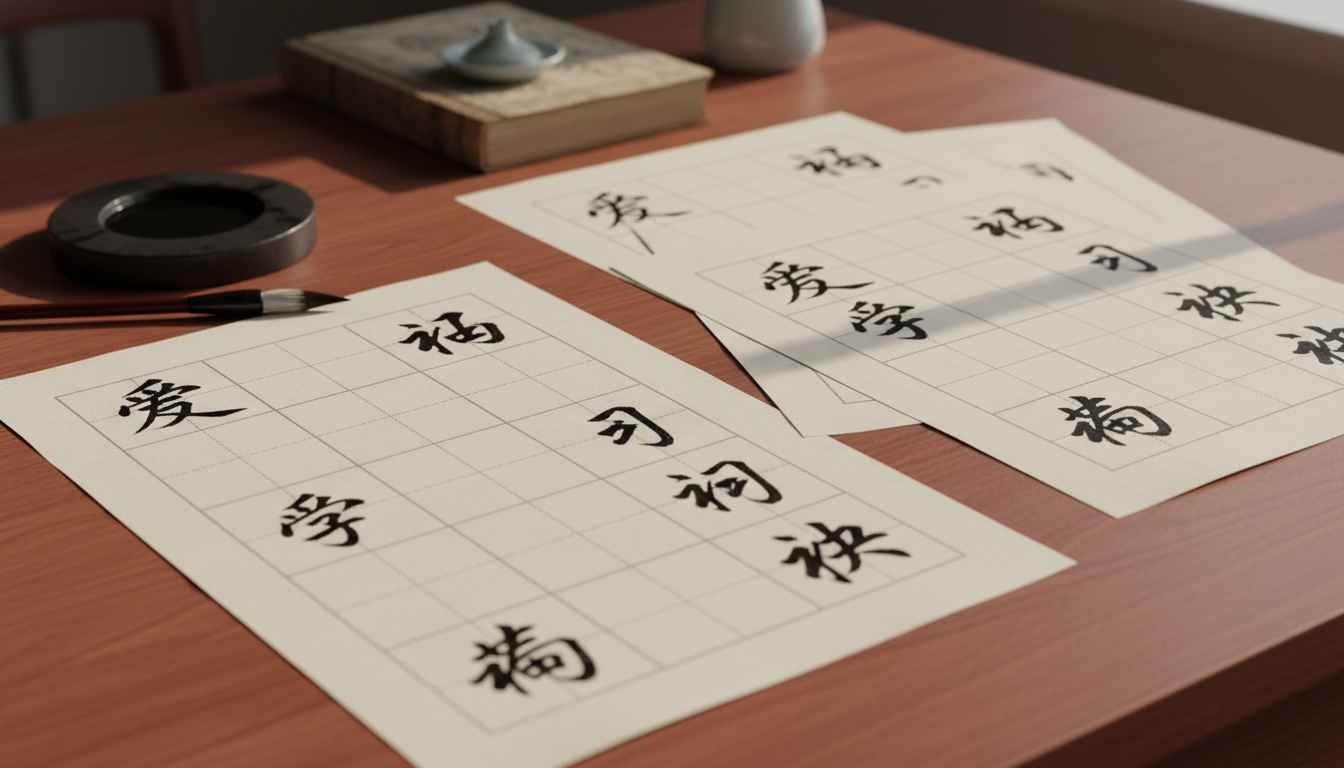
Structured practice sheets typically feature grids that guide stroke order and alignment. They often highlight radical placement, allowing learners to recognize patterns across characters. For beginners, this visual scaffolding reduces cognitive load, enabling concentration on form rather than freehand guesswork. Over time, repeated practice reinforces muscle memory, making writing more natural and confident.
For teams or educators looking to produce customized learning materials, cloud-based documentation tools like ClickHelp can streamline the process. Using such platforms, instructors can create, host, and maintain digital practice sheets accessible to students worldwide. This modern approach aligns traditional learning with contemporary technology, ensuring a consistent and scalable learning experience.
How Chinese Character Practice Sheets Enhance Learning
Research into language acquisition consistently emphasizes the importance of handwriting in memory retention. Unlike typing, which relies on motor patterns largely isolated from character form, handwriting engages visual, kinesthetic, and cognitive faculties simultaneously. Practice sheets enforce correct stroke order, which is crucial; a single misplaced stroke can alter meaning entirely.
Structured sheets often incorporate three key elements: a model character, traceable outlines, and free-writing space. Beginners can first follow the model, then trace over faint guidelines, and finally attempt the character independently. This graduated approach nurtures both accuracy and confidence. Over time, learners not only replicate characters but begin to intuitively understand structural relationships between radicals and complete forms.
Potential Drawbacks and Who Should Avoid This
While practice sheets are invaluable for most learners, they are not without limitations. Individuals with fine motor skill difficulties may find repetitive writing frustrating or discouraging. Similarly, learners who require highly interactive or auditory-based methods might benefit more from multimedia approaches like digital stroke apps or pronunciation software. It is always wise to consult educational professionals if you encounter persistent challenges, ensuring that practice remains effective and positive.
Another consideration is overreliance on worksheets. Without complementary activities such as reading, speaking, and context-based writing, mastery can be slow. Balanced learning should integrate character recognition, vocabulary usage, and cultural immersion alongside handwriting practice.
Optimizing Your Practice Routine
Consistency is paramount. Short, frequent sessions of 10–20 minutes per day yield better results than occasional, lengthy marathons. Start with foundational characters, gradually increasing complexity. Recording progress and revisiting difficult characters reinforces retention. Additionally, combining visual cues with mnemonic techniques can further strengthen memory. For example, associating a radical with a familiar object or story makes the character more memorable.
Beyond traditional paper, digital practice sheets offer interactivity. Some platforms allow instant feedback, stroke analysis, and progress tracking. This technology complements conventional methods, bridging traditional learning with modern convenience. Whether using paper or digital formats, the principle remains the same: deliberate, repeated practice is the path to proficiency.
Glossary
汉字 (hànzì): Chinese characters, the written symbols used in the Chinese language.
Radical: A component of a Chinese character that often indicates meaning or pronunciation.
Stroke order: The sequence in which the lines and dots of a character are written.
Logogram: A written character that represents a word or morpheme rather than a sound.
In conclusion, Chinese character writing practice sheets serve as both roadmap and training ground for learners. They provide structured repetition, foster muscle memory, and promote understanding of intricate visual forms. When integrated thoughtfully into a broader learning strategy, they transform the intimidating landscape of Mandarin writing into a manageable, even rewarding journey. By pairing traditional techniques with modern tools, learners can cultivate both precision and fluency, unlocking a deeper appreciation for the language’s beauty and complexity.