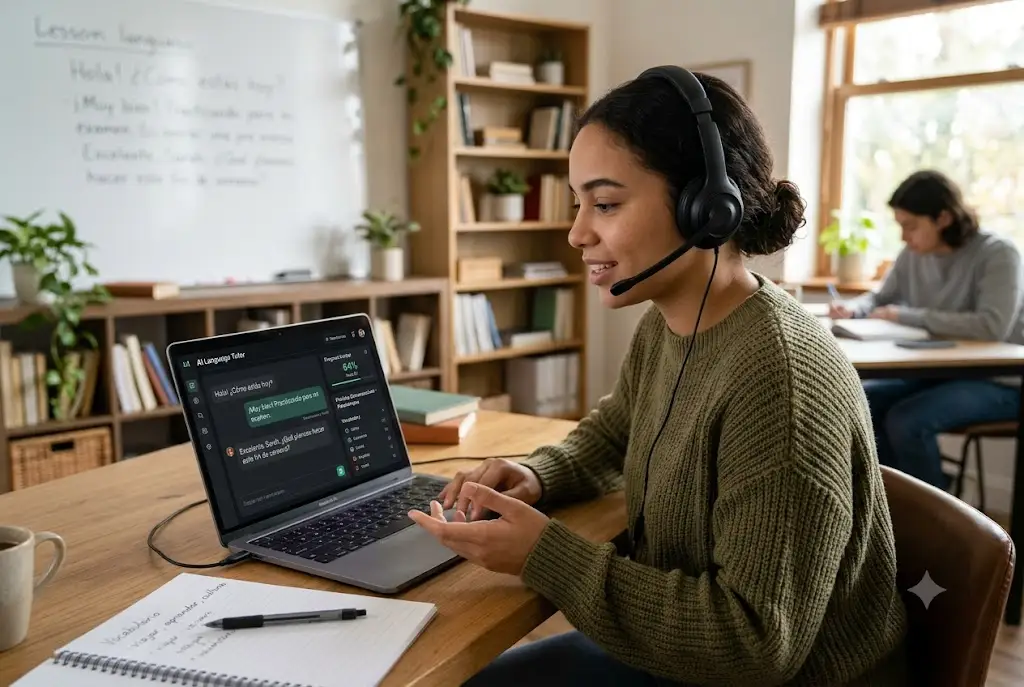
An ai language tutor is changing the way people learn new languages. Instead of relying solely on textbooks, classroom instruction, or fixed learning programs, learners can now receive personalized support powered by artificial intelligence. From instant grammar corrections to realistic conversation practice, AI-driven tools are helping students learn faster, practice more often, and build confidence in real-world communication.
As technology continues to evolve, artificial intelligence and language learning are becoming increasingly connected. Whether you’re studying English, Spanish, French, German, Japanese, or another language, AI-powered platforms offer flexible learning experiences that adapt to your goals and skill level.
What Is an AI Language Tutor?
An AI language tutor is a software application or digital platform that uses artificial intelligence to help users learn and practice a language. These systems analyze learner behavior, identify strengths and weaknesses, and provide customized lessons and feedback.
Unlike traditional learning methods that follow a fixed curriculum, AI tutors can adapt to individual progress. This personalized approach allows learners to spend more time on areas that need improvement while moving quickly through concepts they already understand.
Many modern AI tutors combine natural language processing, speech recognition, and machine learning technologies to create interactive learning experiences.
How AI Language Tutors Work
Most AI-powered language learning platforms collect information about learner performance and use it to tailor future lessons. As users complete exercises, engage in conversations, and answer questions, the system continuously adjusts the learning path.
Personalized Learning Paths
AI systems analyze learning patterns and create customized lesson plans. If a learner struggles with verb conjugation or pronunciation, the platform can automatically provide additional practice.
Instant Feedback
One of the biggest advantages of AI tutors is immediate correction. Learners no longer need to wait for a teacher to review assignments. Instead, grammar, spelling, pronunciation, and vocabulary mistakes can be identified instantly.
Conversation Practice
Many AI tutors simulate real conversations. Users can engage in dialogue, answer questions, and practice speaking without feeling pressured by social situations.
Benefits of Using an AI Language Tutor
24/7 Availability
Traditional tutoring often depends on schedules and availability. AI tutors can be accessed anytime, making them ideal for busy students and working professionals.
Personalized Learning Experience
Every learner progresses differently. AI adapts content to match skill levels, learning speed, and educational goals.
Cost-Effective Learning
Many learners explore free AI language tutors before investing in premium programs. Free tools can provide valuable practice opportunities without the cost of private lessons.
Increased Speaking Confidence
Fear of making mistakes prevents many learners from speaking. AI-powered conversation tools create a judgment-free environment where users can practice comfortably.
Consistent Practice
Language acquisition requires repetition. AI platforms encourage daily learning habits through reminders, progress tracking, and personalized exercises.
Artificial Intelligence and Language Learning: A Growing Partnership
The relationship between artificial intelligence and language learning continues to strengthen as educational technology advances.
AI can now analyze pronunciation patterns, detect grammar errors, recommend vocabulary exercises, and even generate customized reading materials. These capabilities allow learners to receive targeted support that was once available only through experienced instructors.
According to research and educational guidance published by UNESCO, artificial intelligence has significant potential to support personalized education when implemented responsibly.
As AI technology becomes more sophisticated, language learners can expect even more realistic interactions and adaptive learning experiences.
Common Features Found in AI Language Tutors
Speech Recognition
Speech recognition technology evaluates pronunciation and helps learners improve speaking accuracy.
Grammar Assistance
AI-powered grammar tools identify mistakes and explain corrections in real time.
Vocabulary Building
Many platforms track vocabulary retention and recommend review sessions when necessary.
Writing Feedback
Learners can submit written exercises and receive suggestions related to grammar, style, and sentence structure.
Progress Analytics
Detailed reports help users understand strengths, weaknesses, and overall improvement.
Who Can Benefit from an AI Language Tutor?
AI tutors are suitable for a wide range of learners.
- Students preparing for language exams
- Professionals working in multilingual environments
- Travelers learning practical communication skills
- Immigrants adapting to a new country
- Language enthusiasts pursuing personal interests
- Teachers seeking supplemental learning resources
Because AI tools are highly flexible, they can support beginners as well as advanced learners.
AI Tutors vs Traditional Language Tutors
Both AI and human tutors offer valuable learning opportunities. However, they serve different purposes.
Advantages of AI Tutors
- Available anytime
- Lower cost
- Instant feedback
- Scalable learning resources
- Consistent practice opportunities
Advantages of Human Tutors
- Emotional support and motivation
- Deep cultural insights
- Complex conversation guidance
- Personal teaching experience
- Adaptive communication strategies
Many successful learners combine both approaches to maximize progress.
Choosing the Right AI Language Tutor
Not all AI-powered learning tools offer the same experience. When evaluating options, consider the following factors:
- Supported languages
- Conversation quality
- Pronunciation feedback accuracy
- Learning personalization
- Mobile accessibility
- Free versus premium features
- Privacy and data protection policies
It’s also helpful to compare different AI-powered assistants. In our upcoming guide on ChatGPT vs Claude vs Gemini for language learning, we examine how leading AI systems perform as language learning assistants.
Are Free AI Language Tutors Worth Using?
Many learners begin with free AI solutions. While premium subscriptions often provide advanced features, free tools can still deliver meaningful educational value.
Free AI language tutors are especially useful for:
- Basic conversation practice
- Vocabulary expansion
- Grammar correction
- Writing assistance
- Daily language exposure
For learners with limited budgets, free resources can serve as an excellent starting point before transitioning to more comprehensive platforms.
Combining AI Tutors with Other Learning Methods
Although AI offers significant advantages, language learning remains most effective when multiple methods are combined.
For example, learners can pair AI tutoring with flashcard apps for language learning to improve vocabulary retention through spaced repetition. Reading books, listening to podcasts, watching videos, and engaging in conversations with native speakers can further accelerate progress.
Some learners may also prefer exploring traditional tools. Future articles in this cluster will examine language learning apps that don’t use AI and compare their strengths with AI-powered solutions.
Challenges and Limitations of AI Language Tutors
Despite rapid improvements, AI language tutors are not perfect.
- They may misunderstand context in complex conversations.
- Cultural nuances can be difficult for AI systems to explain.
- Some pronunciation assessments may not be fully accurate.
- Advanced learners may require deeper feedback than AI currently provides.
Understanding these limitations helps learners use AI effectively while maintaining realistic expectations.
The Future of AI Language Learning
Artificial intelligence is likely to play an even larger role in education over the coming years. Improvements in voice technology, multilingual processing, and adaptive learning algorithms will continue enhancing the learning experience.
Future AI tutors may provide increasingly natural conversations, real-time translation support, immersive virtual environments, and highly personalized lesson plans that adapt continuously to learner needs.
Conclusion
An ai language tutor offers a powerful combination of accessibility, personalization, and convenience. Whether you’re looking to improve speaking skills, expand vocabulary, strengthen grammar, or practice daily conversations, AI-powered tools provide valuable support at every stage of the learning journey.
While they may not completely replace human instructors, AI tutors have become an important part of modern language education. By combining AI technology with proven learning strategies, learners can build stronger language skills and achieve their goals more efficiently.